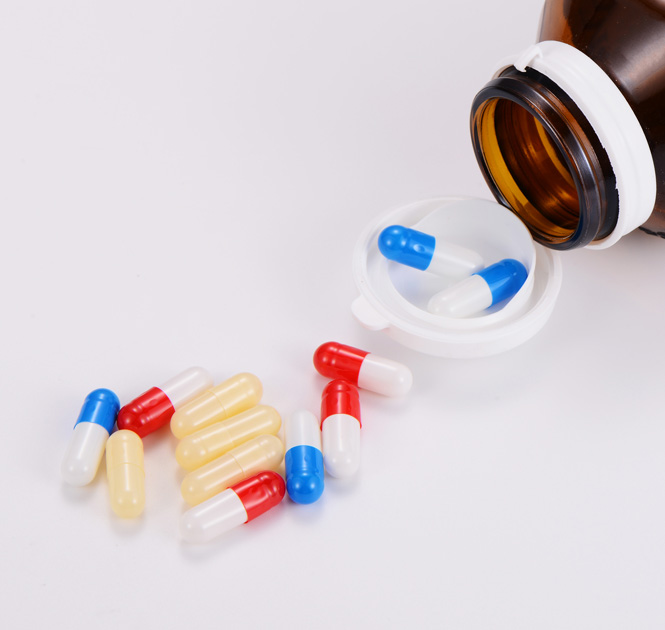
When sourcing empty capsule shells, one question comes up more than almost any other: “Gelatin or HPMC—which is better?” The question itself is slightly off-target. There is no universally “better” material—only the one that matches your formulation. Gelatin and hydroxypropyl methylcellulose (HPMC) differ sharply in moisture content, chemical inertness, regulatory labeling, and cost structure. Choose wrong, and the problem tends to surface on the filling line or inside the stability chamber—not in the quotation.
This article breaks down the differences along the dimensions that actually matter to procurement teams.
Moisture: The Most Underrated Variable
Gelatin capsule shells typically contain 13%–16% moisture, while HPMC shells hold only 4%–6%. That gap of roughly ten percentage points determines what your fill material experiences over the shelf life.
For probiotics, enzymes, and anything sensitive to hydrolysis, moisture in a gelatin shell migrates steadily into the contents. In one patent comparison, after 90 days under accelerated stability conditions, lipase activity in gelatin capsules dropped to an average of 77% of initial value, while lipase in HPMC capsules remained at roughly 99%. The difference is not subtle.
HPMC’s low moisture also means broader storage tolerance. Gelatin shells become brittle and crack below about 35% relative humidity and turn tacky above 60%; HPMC shells hold their structure across a 20%–70% RH range. If your product ships to Southeast Asia, the Middle East, or any hot-and-humid market, this deserves serious weight.
Chemical Compatibility: Cross-Linking vs. Inertness
Gelatin is an animal-protein derivative with free amino groups. When the fill contains aldehydes, esters, or certain botanical extracts, the gelatin shell can undergo cross-linking—showing up as a harder shell, delayed disintegration, and abnormal dissolution profiles. This is not a batch defect; it is built into the material’s chemistry.
HPMC is a cellulose derivative and chemically close to inert. It does not cross-link and does not react with most active ingredients. For formulations containing reducing sugars, aldehyde-bearing flavors, or highly active botanical extracts, HPMC offers a wider margin of safety.
Disintegration and In Vivo Behavior: What the Data Say
A common concern: are HPMC capsules slower to disintegrate? The answer depends on the specific product.
A gamma-scintigraphy study published on ScienceDirect compared HPMC capsules (with a carrageenan gelling system) against gelatin capsules in fasted subjects. Mean gastric disintegration time was 9 ± 2 minutes for HPMC versus 7 ± 4 minutes for gelatin—a difference that was not statistically significant (P = 0.108). For the vast majority of oral formulations, that gap is clinically negligible.
One caveat: the gelling system in an HPMC capsule (carrageenan vs. gellan) can affect acid-stage opening behavior. Gellan-based HPMC capsules may open more slowly under acidic conditions, while carrageenan-based systems behave closer to gelatin in vivo. If disintegration is critical, confirm the gelling agent with your supplier.
Regulatory and Labeling: Religious Compliance and Market Access
Gelatin is sourced from bovine bone or porcine skin, which directly determines whether a product can enter certain markets. HPMC, as a plant-derived cellulose, naturally supports vegetarian, Halal, and Kosher claims—with no certification premium attached.
The market trend reinforces this. The global plant-based capsule market was valued at roughly RMB 8.11 billion in 2025 and is projected to reach RMB 12.58 billion by 2032, a CAGR of 6.6%. In China’s pharmaceutical excipient market, plant-based capsules rose from 18% share in 2020 to 29% in 2024—a compound annual growth rate above 12%. If your brand targets Europe, North America, or the Middle East, “plant-based capsule” is itself a selling point, not merely a substitute.
Cost: Look Beyond the Unit Price
HPMC capsules usually carry a higher unit price than gelatin. But the decision should not stop at the quotation. Gelatin capsules in humid environments demand stricter packaging (blister packs, desiccants), whereas HPMC capsules can often meet stability requirements in HDPE bottles with a simple seal. Add the premium captured by a plant-based label and the lower risk of batch rejection, and total cost of ownership can tilt toward HPMC.
Conversely, if your product has a short shelf life, turns over quickly, and targets markets with no vegetarian claim requirement, gelatin’s mature supply chain and lower unit price remain a rational choice.
Our Recommendation
| Your Situation | Recommended Material |
|---|---|
| Filling probiotics, enzymes, or moisture-sensitive ingredients | HPMC |
| Product requires vegetarian/Halal/Kosher claims | HPMC |
| Target market is hot and humid | HPMC |
| Fill contains aldehyde-bearing or reducing-sugar botanical extracts | HPMC |
| Standard nutraceutical, fast turnover, cost-sensitive | Gelatin |
| Extremely strict disintegration requirement with a simple formulation | Gelatin (or a confirmed carrageenan-based HPMC) |
If you are unsure, the safest path is a side-by-side accelerated stability test. Hold both shell types at 40°C/75% RH for three months and track active-ingredient potency, shell appearance, and disintegration behavior. The data will give you the answer.
Dongguan Yidikou Medical Tech Co.,Ltd. supplies both pharmaceutical-grade gelatin and plant-based HPMC empty capsule shells, with sample requests and formulation-compatibility consultations available. Tell us your fill type and target market, and we will help narrow the choice.
This article is for informational purposes only and does not constitute formulation or regulatory advice for any specific product. Final selection should be based on your own stability data and the regulatory requirements of your target market.