By Dongguan Yidikou Medical Tech Co.,Ltd. | Empty Capsule Shell Solutions
The EU’s ban on titanium dioxide (E171) as a food additive took effect on 7 August 2022. For capsule shell buyers, the immediate question was simple: what replaces TiO₂? The answer, nearly four years later, is anything but simple. The European Medicines Agency’s own review of TiO₂-free alternatives concluded that none of the 13 capsule systems assessed were considered risk-free, with 12 of 13 carrying two or more compliance risks.
Two names dominate the conversation: zinc white (ZnO) and calcium white (CaCO₃). Both can produce a white shell. Both are already used in pharmaceutical and food contexts. But they are not interchangeable, and the regulatory picture around each is more nuanced than most supplier datasheets suggest.
What the EMA Actually Found
The EMA’s 2024 assessment of TiO₂ alternatives is the most authoritative document available on this topic. Its findings deserve close reading by anyone specifying a TiO₂-free capsule:
On performance: The EMA studied 13 capsule systems (8 HPMC, 5 gelatin) and found that none matched the performance of TiO₂-containing references across all key performance indicators. Alternatives often required higher loading levels to achieve acceptable opacity, and some failed to reach sufficient surface coverage altogether.
On regulatory status: Only calcium carbonate (white) and iron oxide (coloured) are approved food colourants among the alternatives studied. Novel systems containing zinc oxide are not globally approved for food use in oral medicines. This is a critical distinction for capsules used in nutraceuticals or food supplements, where food-additive status may determine market access.
On safety: The EMA’s safety team considered all selected alternatives safe based on history of use, but noted data gaps for some materials compared to TiO₂. Importantly, ZnO, CaCO₃, and several other alternatives were found to be soluble at pH 1.2, meaning they do not fall under the EFSA definition of nanomaterials despite potential nanoparticle content.
Zinc White: Strong Opacity, Regulatory Ambiguity
Zinc oxide offers a higher refractive index than calcium carbonate, which translates to stronger hiding power per unit weight. This matters in capsule shells, where film thickness is measured in fractions of a millimetre. A recent patent filing describes a TiO₂-free hard capsule shell combining ZnO and CaCO₃ (alongside rice starch) to achieve white colour, noting that the suspension has lower viscosity and lower gelling temperature than a TiO₂-based equivalent—advantages for the manufacturing process.
The regulatory position, however, is less favourable. The EMA explicitly flagged that ZnO-containing systems are not globally approved for food use in oral medicines. For a capsule shell destined for a dietary supplement in a market that classifies the shell as a food contact material, this creates a documentation burden that calcium carbonate does not.
There is also the chemical behaviour to consider. ZnO is amphoteric—soluble in both acid and alkali. In the gastric environment, ZnO particles will dissolve. Whether this affects local pH or interacts with sensitive actives is a formulation-specific question that should be answered with dissolution and compatibility data, not assumed.
Calcium White: Approved Status, Performance Trade-offs
Calcium carbonate carries a decisive advantage: it is an approved food colourant in the EU. For capsule shells used in nutraceutical or food supplement applications, this simplifies the regulatory pathway considerably.
The performance trade-off is real, though. The EMA noted that carbonates generally have less opacifying performance and are not as white as TiO₂. Higher loading is typically required to achieve comparable appearance, which can affect film strength and process efficiency. Industry feedback cited by the EMA described calcium carbonate trials producing “insufficient coverage,” “spots,” and “inhomogeneous” films at standard coating levels.
More concerning for certain drug classes: calcium carbonate dissolves in gastric acid, releasing Ca²⁺ ions. A 2025 paper in the International Journal of Pharmaceutical Excipients calculated that calcium from a capsule shell could potentially complex a significant percentage of a co-administered drug—modeling minocycline as an example, with complexation ranging from 29% to 100% depending on dose, coating weight, and pH. The authors noted that data on calcium carbonate levels in capsule shells is “even more scarce” than for film coatings, meaning this risk is largely uncharacterized for capsule applications.
For most vitamins and standard nutraceutical actives, this is unlikely to be clinically meaningful. For potent antibiotics or drugs with narrow therapeutic windows, it deserves explicit evaluation.
The Practical Decision Framework
| Consideration | Zinc White (ZnO) | Calcium White (CaCO₃) |
|---|---|---|
| Opacity per unit weight | Higher | Lower; requires higher loading |
| EU food colourant status | Not approved for food use | Approved |
| Chemical behaviour in GI tract | Soluble at gastric pH | Soluble at gastric pH; Ca²⁺ release |
| Manufacturing impact | Lower suspension viscosity (patent data) | Higher loading may reduce film strength |
| Best fit | Markets/uses where ZnO is accepted; technical opacity priority | Nutraceutical/food supplement capsules; regulatory simplicity priority |
The EMA’s broader conclusion is worth keeping in perspective: replacing TiO₂ is feasible for less than 5% of existing medicinal products, and a full portfolio transition could take 7 to 12 years for a typical company. This is not a quick swap. It is a reformulation exercise with stability, compatibility, and regulatory dimensions that vary product by product.
For capsule shell buyers, the implication is straightforward: do not accept a generic “TiO₂-free” claim without knowing which alternative is used and why. Ask for the CAS number, the regulatory status in your target market, and any compatibility data relevant to your fill.
How We Approach TiO₂-Free Shells at Donguan Yidikou Medical Tech
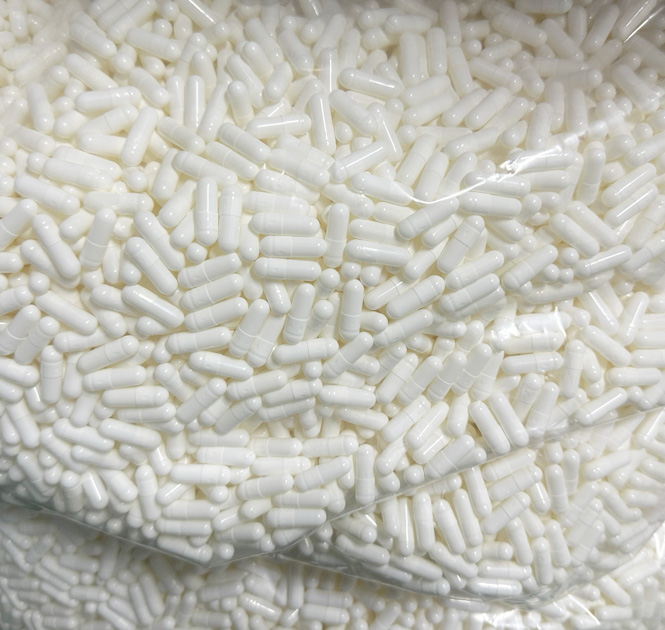
We supply TiO₂-free capsule shells in both zinc white and calcium white systems, with full documentation on the opacifier identity, regulatory status, and recommended loading levels. We do not present either option as a universal replacement for TiO₂—because the EMA’s own data show that no such universal replacement exists.
If you are reformulating a capsule product for the EU market or evaluating shell options for a new launch, our technical team can help you match the opacifier system to your fill formulation and target-market requirements.
Contact us to request samples, specifications, or a technical consultation on TiO₂-free capsule shell selection.
Dongguan Yidikou Medical Tech Co.,Ltd. manufactures empty capsule shells for nutraceutical, pharmaceutical, and food applications. This article is intended for informational purposes and does not constitute regulatory or formulation advice for any specific product.
发表回复